Glossary
Fast Tracking
overlapping, parallelisation
Fast tracking shortens the project duration by running activities that were planned in sequence fully or partly in parallel. It costs no additional budget but increases the risk of rework.
Fast tracking works on the logic of the schedule: a successor starts before its predecessor is fully complete. "Concept finished, then implementation" becomes "implementation starts as soon as 60 percent of the concept is stable". The schedule gets denser, the amount of work stays the same.
What matters is the type of dependency:
- Mandatory dependencies follow from the matter itself, such as pouring concrete and letting it cure before building on top. They cannot be parallelised.
- Discretionary dependencies arise from habit, caution or internal convention. This is exactly where fast tracking applies.
The price is rework: if the specification changes afterwards, part of the work already started is void. Fast tracking is therefore the riskier of the two accelerators, while crashing pays with budget instead of risk.
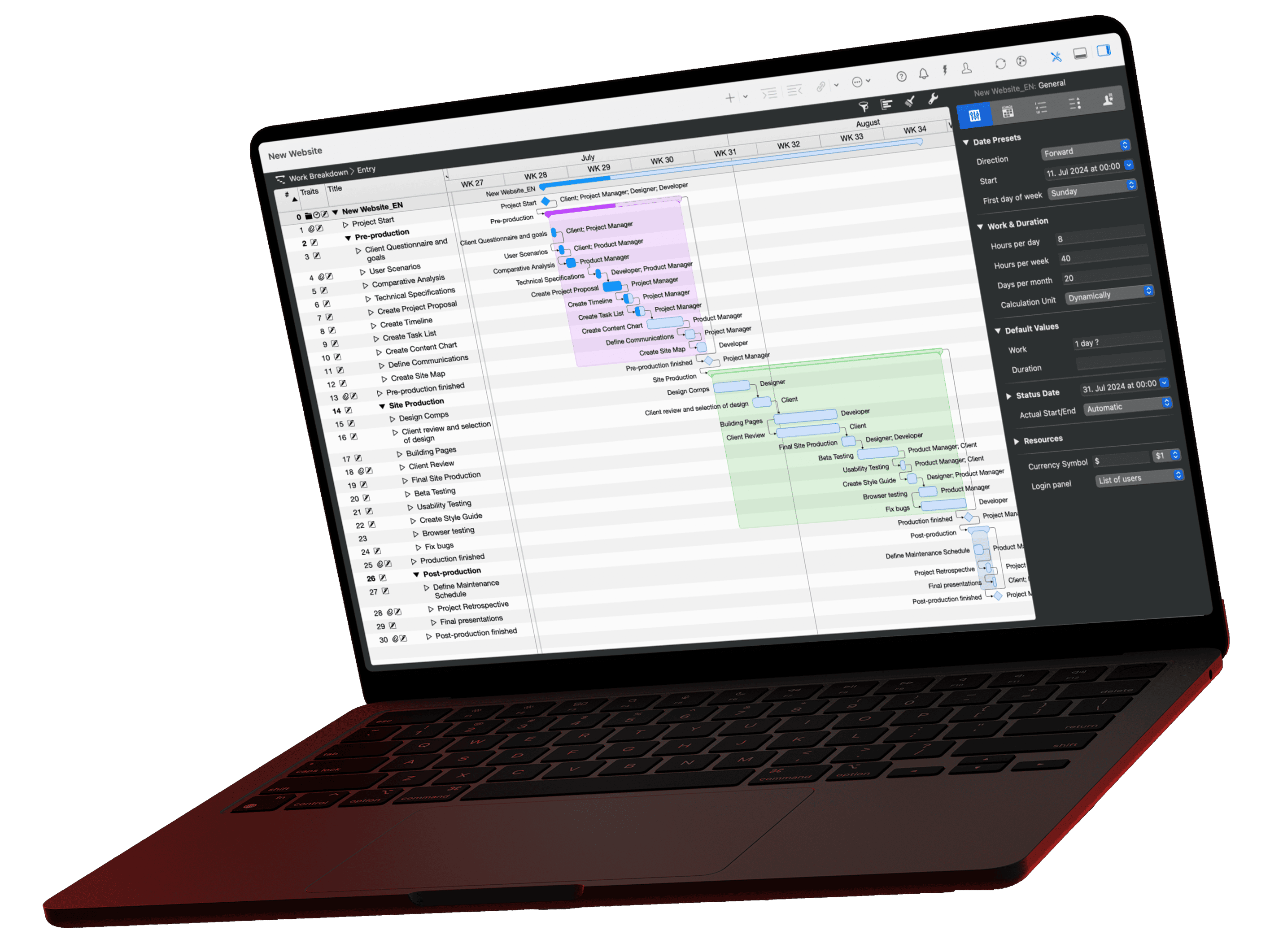
In Merlin Project you enter an overlap as negative lead/lag on the dependency: on a finish-to-start dependency, a lead/lag of -2 days lets the successor start two days before the predecessor finishes. A positive value does the opposite and creates waiting time. Alternatively, switch the dependency type to start to start. Display the critical path alongside to see whether the overlap actually pulls the project end forward.
How to use fast tracking together with contouring is shown in the article fast tracking, crashing and contouring in practice.